

WordPress sites face constant hacking attempts because the platform powers over 43% of websites worldwide, making it a prime target. Regular security checks, malware scanning, firewall monitoring, and brute-force defenses, stop attackers before they inject spam, steal data, or damage search rankings. Weekly updates, daily backups, and scans with tools like Sucuri protect business reputation and customer trust long-term.
Key Takeaways
- WordPress powers 43.5% of all websites globally, making your site an attractive target for hackers.
- Security breaches cause SEO damage, revenue loss, and destroy customer trust in your business permanently.
- Regular security audits detect malware, vulnerabilities, and brute-force attacks before they compromise your data.
- Greenbird Web Design recommends implementing firewalls, two-factor authentication, and malware scanning as essential protections.
Why Is Every WordPress Site Already A Target?
Size offers no protection. Small charity sites, church blogs, and local business pages face the same automated attacks as major retailers. Hackers scan the web indiscriminately for weak points rather than targeting specific organizations.
The scale of the threat is staggering. Sucuri's report found that more than 13,000 WordPress websites were compromised every single day in 2023. That figure represents thousands of small businesses, nonprofits, and community groups losing control of their sites in a single year.
Why does WordPress attract so much attention from hackers?
Popularity creates risk. WordPress powers over 43.5% of websites on the internet, making it the most tempting target for cyberattacks simply because of the sheer number of installations available to exploit. A single vulnerability found in one plugin or theme can be used against millions of sites at once.
What can organizations do to stay ahead of these threats?
Proactive maintenance closes the gaps attackers rely on. A proper WordPress Site Security Audit paired with ongoing care plans guards against these risks through:
- Weekly software updates that patch known vulnerabilities
- Uptime monitoring with real-time alerts
- Daily off-site backups
- Regular security scans
Reliable hosting and consistent oversight turn WordPress from a liability into a dependable foundation for sustainable growth.
What Happens During A WordPress Site Security Audit?
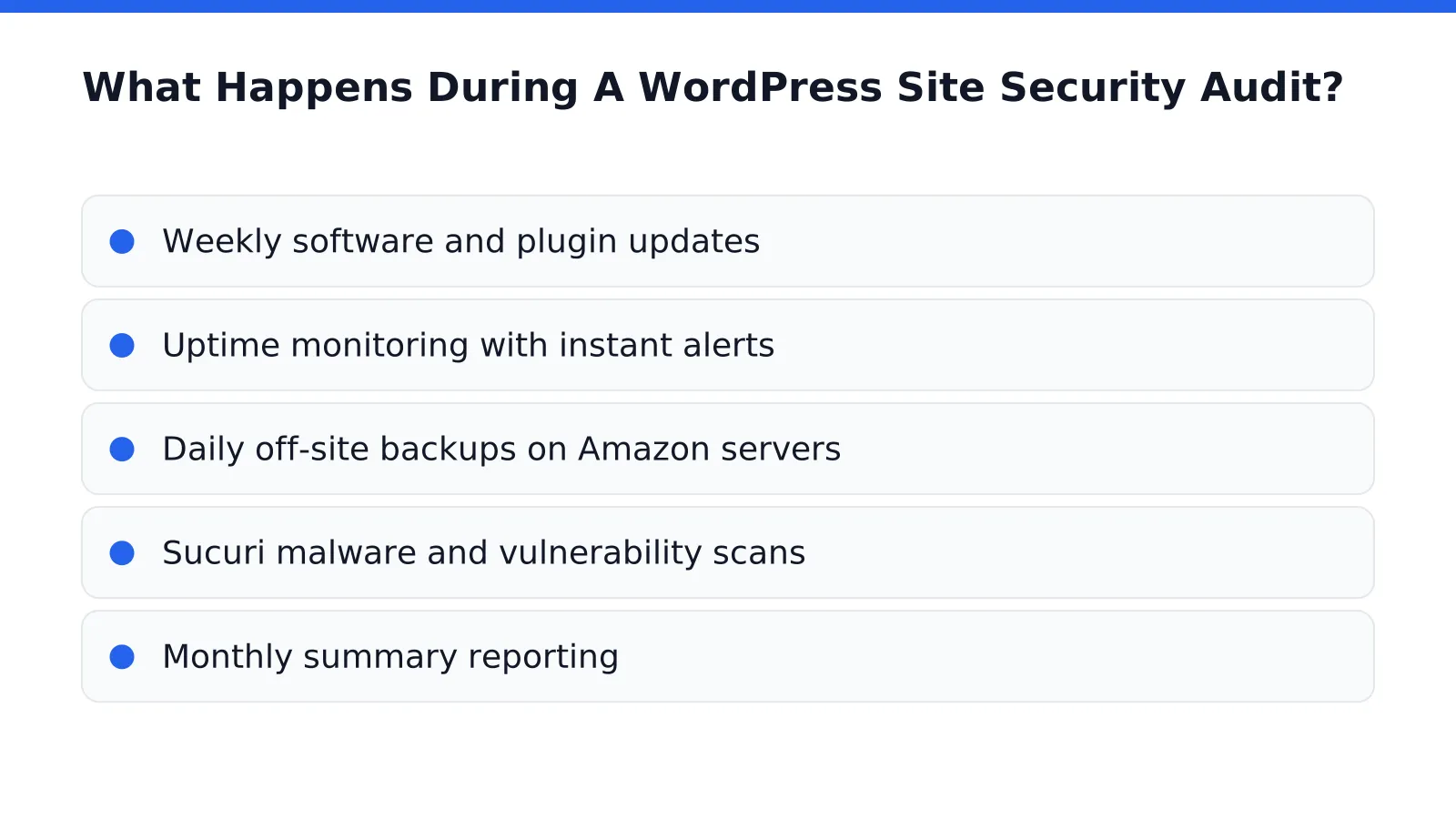
A WordPress Site Security Audit combines several layers of ongoing protection rather than a single checkup. Weekly software updates patch known vulnerabilities before attackers exploit them. Uptime monitoring runs alongside daily off-site backups stored on Amazon servers, with regular Sucuri scans checking for malware and intrusions.
The goal behind this process stays simple: find weak points and stop attacks before damage occurs. A site left unchecked for months carries risk that compounds quietly, often invisible until something breaks. Catching a vulnerability early costs far less than repairing a compromised site, restoring lost trust, and rebuilding search rankings after the fact.
Greenbird Web Design treats each audit as part of a larger strategy, not an isolated technical task. Narrative-led site planning works alongside proactive care, so security findings feed back into decisions about content, performance, and growth. Audits become a tool for strengthening the whole site, not just patching holes.
What's included in an ongoing maintenance plan?
Maintenance plans bundle technical support allowances with monitoring and tailored recommendations. Clients receive monthly reports summarizing activity, traffic, and any issues addressed during the period.
How often should a WordPress site be checked for security issues?
Weekly checks catch most emerging threats before they escalate. Combined with daily backups and continuous uptime alerts, this cadence keeps small business owners and non-profit administrators from discovering problems only after visitors or donors do. A typical audit covers:
- Weekly software and plugin updates
- Uptime monitoring with instant alerts
- Daily off-site backups on Amazon servers
- Sucuri malware and vulnerability scans
- Monthly summary reporting


0 Comments